
WordPress for Web Development: Still a Serious Choice?
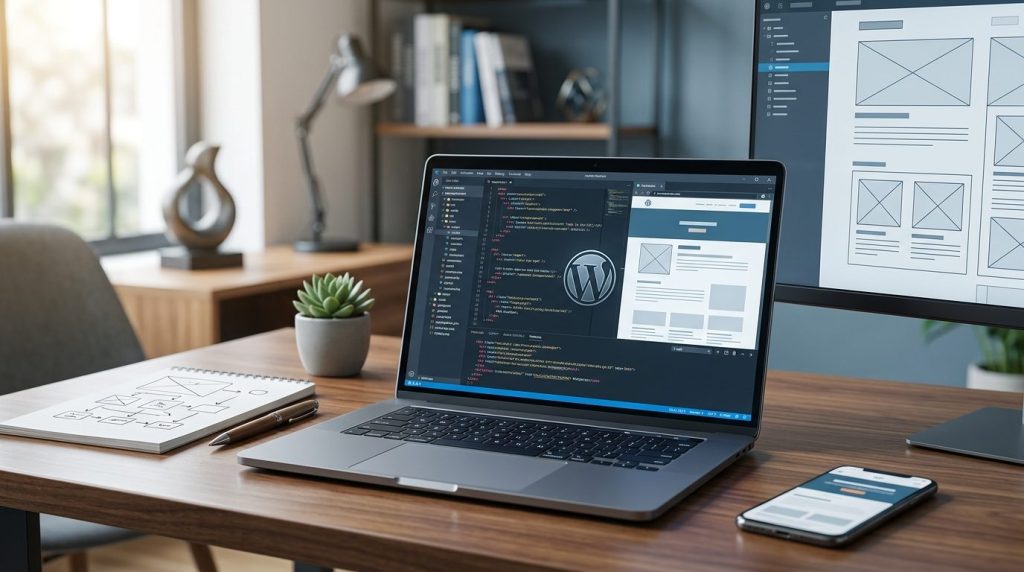
WordPress for web development gets dismissed a lot. It’s “just a blogging tool,” the argument goes. It’s bloated. Real developers build from scratch. Some of that was fair a decade ago. Most of it isn’t anymore.
WordPress powers a large share of the world’s websites, and not only small blogs. Ecommerce stores, membership sites, publications, and business sites doing real revenue run on it. So the useful question isn’t whether WordPress can handle web development. It’s when it’s the right tool and when it isn’t.
Is WordPress good for web development?
For most business websites, yes. WordPress gives you a mature platform, a huge ecosystem of plugins and themes, and a content system non-technical people can actually use. You reach a professional result faster than building the same thing from scratch.
It’s less suited to what it was never meant to be: a bespoke web application, a high-scale SaaS product, a real-time system. Using WordPress for those is possible and usually the wrong call.
What WordPress is genuinely good at
- Content-driven sites: blogs, publications, marketing sites, documentation.
- Ecommerce through WooCommerce, from a handful of products to large catalogues.
- Fast, standard builds: a professional business site in days, not months.
- Editing without a developer: owners update their own content.
- Extensibility: most features you’d want already exist as a plugin, and anything missing can be custom-built.
Where WordPress struggles (the honest version)
No platform is free of trade-offs, and pretending otherwise helps no one.
- Plugin sprawl: it’s easy to install twenty plugins and end up slow and fragile.
- Security: popularity makes it a target, so updates and maintenance aren’t optional.
- Performance at the edges: a carelessly built WordPress site can be heavy. A well-built one is fast, but that takes care.
- Not built for apps: complex, custom application logic fights the platform.
Most of these are maintenance and build-quality issues, not reasons to avoid WordPress. They’re reasons to build it properly.
WordPress vs custom-coded builds
Building from scratch gives total control and no platform baggage. It also costs far more, takes far longer, and leaves you with something only a developer can update.
For a business website, that trade rarely pays off. You spend three months and a large budget to rebuild what WordPress gives you in a week, and you lose the ability to edit your own content. Custom-coded builds earn their place for genuine software products, not brochure-and-store websites.
WordPress for developers vs for business owners
If you’re a developer, WordPress is a fast way to ship client sites and a solid base to extend with custom code. If you’re a business owner, it’s the platform most likely to give you a professional site you can actually run yourself.
Either way, the work still has to be done well. A cheap, careless WordPress build is where the platform’s bad reputation comes from.
Getting web development done on WordPress without hiring
You don’t have to hire a developer to build or maintain a WordPress site properly. A subscription team handles the development, and the custom work when you need it, on a flat monthly fee. That’s the model behind WordPress website development at WP Relieve: send the task, a developer builds it, usually within 24 hours. If you’re still weighing your options, here’s how to think about hiring a WordPress developer in the first place.
Frequently asked questions
Is WordPress good for web development in 2026?
For content sites, ecommerce, and business websites, yes. It’s a mature platform with a huge ecosystem and a content editor non-technical people can use. It’s a poor fit for bespoke web apps or high-scale software products, which are better custom-built.
Is WordPress better than coding a website from scratch?
For a business website, usually. WordPress gets you a professional, editable site far faster and cheaper than custom code, and you can update it yourself. Custom-coded builds make sense for software products, not standard marketing or ecommerce sites.
Why does WordPress have a bad reputation among some developers?
Mostly because of low-quality builds: sites drowning in plugins, never maintained, and slow as a result. A well-built, well-maintained WordPress site is fast and secure. The platform gets blamed for problems that are really build-quality and maintenance problems.
Can WordPress handle custom functionality?
Yes. Beyond its plugins, WordPress supports custom themes, custom plugins, custom post types, and integrations with outside software. See custom WordPress development for when tailored code is the right call.
Get WordPress development handled risk-free with a 7-day money-back guarantee